

How To Build A GloriaFood Style Online Ordering Platform In 2025
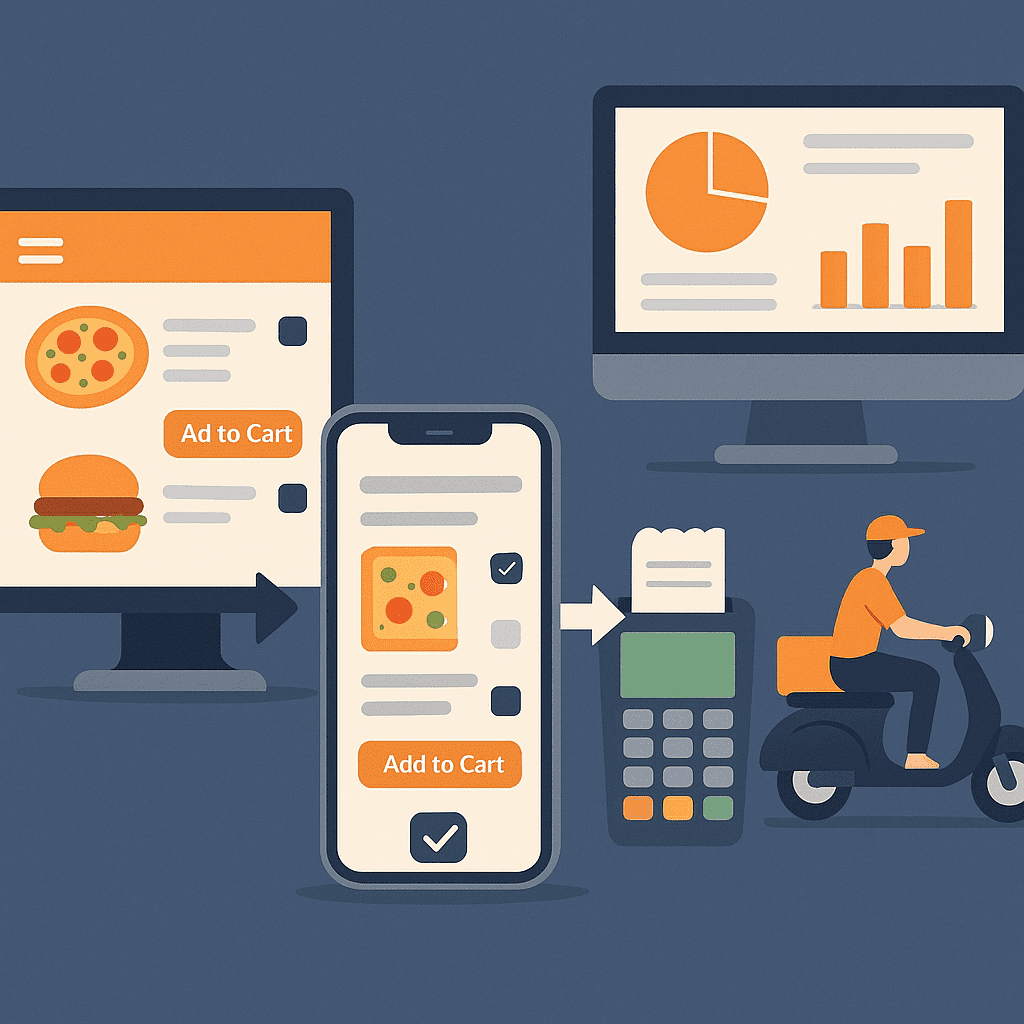
If you want to build an online food ordering platform that works like GloriaFood, you need to understand how restaurants work in real life, how customers behave when they order food online and how technology can support both groups in a calm and clear way. The key parts include a menu system that handles many rules, a strong order flow, a clean dashboard for restaurants, simple customer steps and a backend that can handle rush hours without breaking.
Introduction
There is a moment when people first try to build a restaurant ordering system. At the start, it seems simple. You think it is only a menu page, a checkout page and a payment step. After a short time, most teams find out that this world is much bigger. It is a full system with its own set of rules, habits and pressure points. You begin to see that restaurants have their own rhythm. Customers also have their own rhythm. A good platform joins these two groups in a smooth way.
In 2025, the world of online food ordering has grown again. People expect fast pages, clear screens and little waiting. Restaurants expect tools that remove stress, not tools that add more. If you want your platform to serve small cafes, busy takeaway shops and large restaurant chains, you must shape a system that is flexible, strong and ready for growth.
The guide below goes through every major part. The aim is not to frighten you. It is simply a full map you can follow step by step as you shape your own product.
Understanding How Restaurants Work In Real Life
Restaurants do not work in a slow and steady way. They have quiet moments and very loud ones. They have days when orders come in a small stream and other days when orders arrive like waves. A proper restaurant ordering system must respect this natural flow.
Common daily challenges
- Food stock can run out without warning
- Staff may forget to mark items as sold out
- Drivers may arrive too early or too late
- Prep time may jump because the kitchen is full
- Lunch and dinner habits are very different
- Weekends behave like another world
Why this matters for your system
Each odd moment in a restaurant becomes a technical need in your platform. For example:
- You need time based menu rules
- You need simple tools for staff to pause orders
- You need real time status changes
- You need ways for customers to know honest waiting times
When your system shows that it understands the real world of food service, restaurants trust it more.
Core Architecture Overview
A stable online food ordering platform normally follows a multitenant setup. This means one main system serves many restaurants at the same time. Each restaurant has its own menus, orders and data, but they all share the same foundation. This method helps you push updates to all users without extra work.
Common tech stack
- A web app for customers built with React or Vue
- Mobile apps made with Flutter or React Native
- Backend services built with Node.js, Laravel or Django
- PostgreSQL for structured data
- Redis for fast sessions and queues
- A CDN for images and menu files
Why asynchronous systems matter
Restaurants expect screens to update the moment an order is accepted or ready. To make this happen, you use:
- Webhooks
- Background workers
- Message queues
- Event based patterns
These allow the system to feel live even when many things happen behind the scenes.
Menu And Modifier Engine
The menu is the heart of any restaurant ordering system. A weak menu setup will cause problems later. A strong menu setup saves time and stops the team from fighting edge cases.
Your menu builder should allow:
- Categories and sub categories
- Extra groups with minimum and maximum rules
- Different prices for different versions
- Time based menu items
- Support for many languages
- Photos that load fast on mobile
Menus can become complex. Some meals need several choice steps. Some need different sizes. Some need rules like “choose at least one sauce”. Building a clear engine early stops endless bugs later.
Order Lifecycle And Flow
When a customer places an order, this starts a full chain in the system. The moment the order lands, the restaurant has to accept it, prepare it, send it out or have it ready for collection.
A strong order flow normally includes:
- Order placed
- Order accepted or auto accepted
- Prep started
- Driver assigned if it is delivery
- Food ready
- Out for delivery
- Completed
- Cancelled
Event based design
Every time the order moves to the next step, the system triggers a small event. This event updates the restaurant dashboard, customer screen and even the driver app. It creates a natural feeling of real time without heavy load on the servers.
Payments And Security
Payments are one of the hardest parts for new teams. You must make the payment step smooth and safe. You should not store card data yourself. Leave this job to trusted payment partners.
Core payment rules
- Use tokenisation so cards are never stored on your server
- Support 3D Secure where needed
- Allow popular wallets like Apple Pay and Google Pay
- Offer more than one payment gateway
- Add basic fraud checks
- Support partial refunds and full refunds
Why this matters
Restaurants depend on fast and fair payouts. If your payment process is weak, the restaurant may lose trust in your system even if the rest of your tools are good.
Delivery And Driver Dispatch
Some platforms do not handle delivery at all. Others give full delivery tools. If you choose to offer delivery, you will need to add several parts.
Delivery tools
- Driver assignment
- Live GPS map
- Driver availability
- Delivery zones
- Distance based charges
- Estimated delivery times that adjust to kitchen load
- Routing tools from map APIs
Delivery is a real test for your system. It puts load on maps, live updates, tracking and timing. Many platforms rush this part, but a smooth delivery tool is a big reason why restaurants choose one system over another.
Restaurant Dashboard
The restaurant dashboard is where the business lives each day. It should feel simple, friendly and safe. Even staff who are not good with tech should use it with no fear.
Common dashboard tools
- Order control page
- Menu editor
- Collection and delivery rules
- Opening hours
- Holiday hours
- Promotions and vouchers
- Payout pages
- Reports and basic analytics
A small detail can make a big change. For example, a large and bright button that says Pause Orders can save a restaurant during a busy storm of orders.
Customer Experience And Conversion
A customer may leave your platform in just a few seconds if something feels slow. The steps must be simple and clear even for a first time user.
Customer friendly rules
- Simple checkout
- Fast loading pages
- Few clicks to finish
- Guest checkout
- Saved address
- Saved favourite meals
- Clear menu images
- Pre loaded screens for speed
Some customers use older phones or slow networks. If the app still feels fast for them, you have done something right.
Scalability And Reliability
The busiest time for any online food ordering platform is Friday evening. Many systems fail on this day because they did not plan for stress.
Tools that help you stay strong
- Auto scaling
- Load balancers
- Health checks
- Read only database copies
- Error logs
- Uptime monitors
When a platform works perfectly during rush hours, restaurants trust it and stay with it for the long term.
Feature Rollout Strategy
It is easy to get excited and try to launch every feature at the start. This often slows the team down. A smarter way is to launch a simple MVP and then grow at a steady pace.
Good starting features
- Menu
- Ordering
- Payments
- Basic delivery or collection
- Simple dashboard
Later features
- Loyalty points
- Gift cards
- Table ordering
- QR code menus
- Driver tracking
- Webhooks for partners
This method keeps your development focused and lets users learn the system without stress.
Marketing And Restaurant Acquisition
The hardest part of building a restaurant SaaS is not always the coding. It is finding restaurants and helping them believe in your product.
Helpful ways to grow
- Free trials
- Simple onboarding
- Help with menu upload
- Video demos
- One to one calls
- Case stories
- Local sales partners
- Small events with food businesses
Restaurants often trust platforms that show real proof instead of loud words.
Conclusion
Building a SaaS food ordering platform that works like GloriaFood is not quick, but it is possible with a careful plan and a kind approach. If you take the time to understand how restaurants behave each day, you will shape a system that feels natural. When your platform stays strong during busy times, restaurants will treat it as a daily tool they cannot do without. Customers enjoy simple steps, clear pages and honest waiting times. When all of these parts come together, your product becomes more than a simple tool. It becomes a small but steady part of how people enjoy food.
Start with CusenEats by Cusenware
CusenEats is a ready to deploy SaaS food tech platform by Cusenware for businesses that want to launch multi restaurant online ordering. If you want a production ready platform with options to customise and scale, explore CusenEats by Cusenware.